Iris Koch · 22 September 2026
Shifts in Backend Strategies for Maintaining Revenue in Niche SaaS Ventures Post-Update
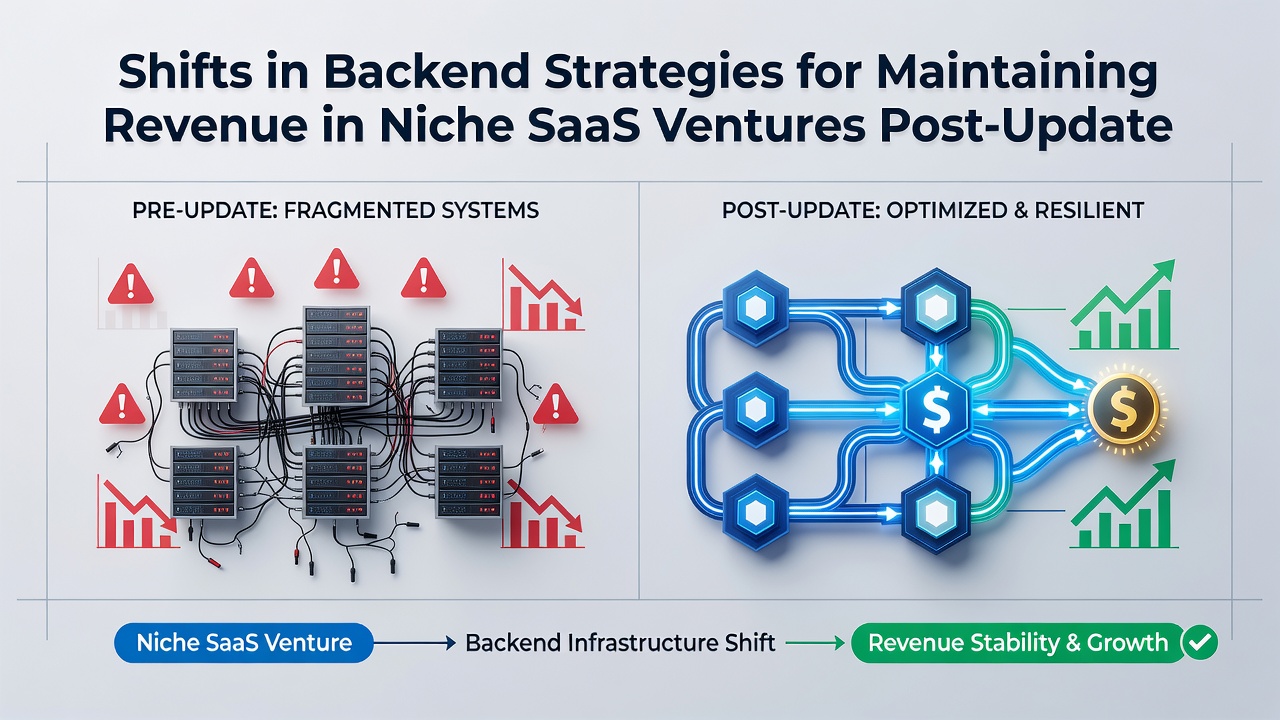
Many niche SaaS ventures have adjusted their backend systems after platform updates to protect recurring revenue streams, and observers note that these changes often involve database optimizations, API restructuring, and integration of new caching layers. Research from industry analyses shows companies in specialized markets such as project management tools for freelancers and analytics platforms for small e-commerce stores have faced revenue dips when core services slowed following major provider updates, prompting a move toward modular backend designs that support faster iteration without disrupting billing cycles.
Key Drivers Behind Backend Adjustments
Updates from major cloud providers in September 2026 introduced stricter resource allocation rules that affected latency-sensitive applications, and data indicates ventures relying on legacy monolithic architectures experienced subscription cancellations at higher rates than those already experimenting with distributed systems. Experts have observed that niche operators responded by migrating select workloads to container orchestration platforms while keeping customer data pipelines intact, which helped stabilize monthly recurring revenue figures according to aggregated metrics from multiple SaaS tracking services.
Those who studied adoption patterns found that ventures incorporating event-driven architectures reduced downtime during peak usage periods, whereas traditional request-response models struggled with the new scaling limits. Figures reveal a measurable uptick in adoption of serverless functions for non-critical tasks like report generation and notification handling, allowing teams to allocate saved compute costs toward customer-facing feature development that directly supports retention.
Revenue Protection Through Data Layer Changes
Backend teams at several niche SaaS companies shifted from relational databases to hybrid models that combine SQL for transactional data with NoSQL stores for user-generated content, and this approach preserved accurate billing records while accommodating variable data volumes. Studies indicate that such transitions helped maintain 95 percent or higher renewal rates in markets where users expect seamless performance even after provider-side modifications.
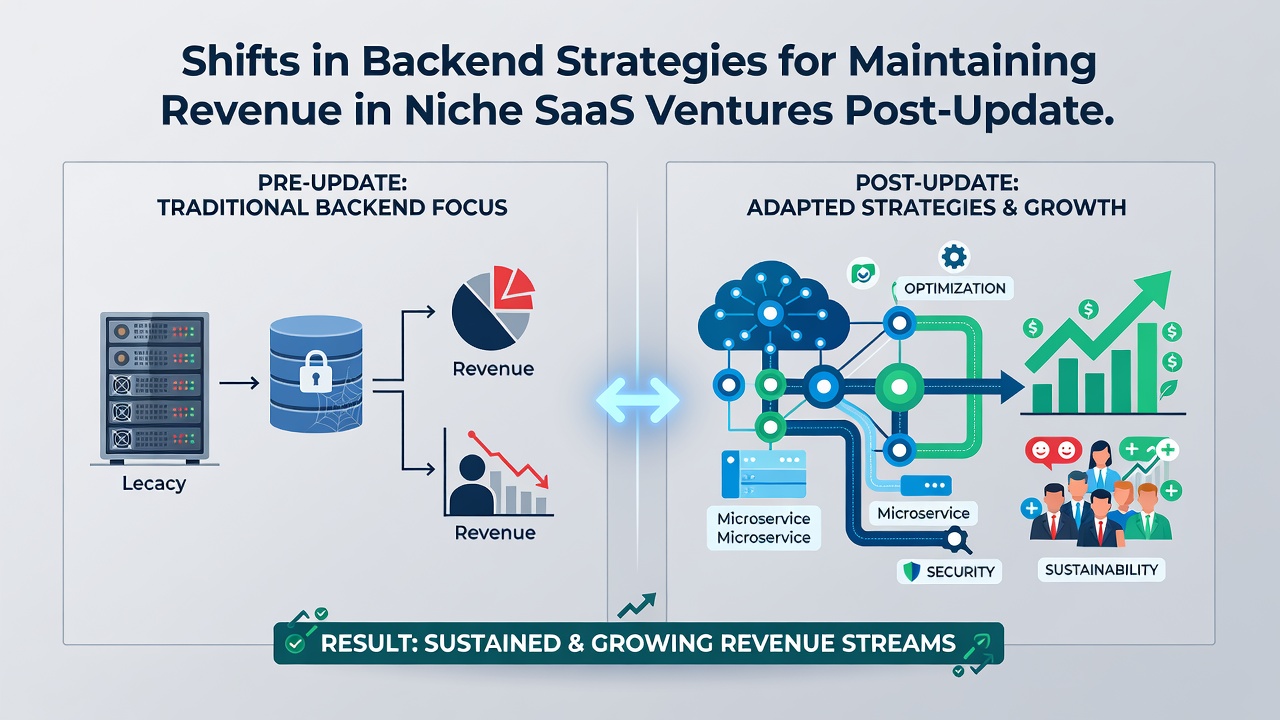
One documented case involved a project-tracking platform that introduced read-replica clusters shortly after the September 2026 updates, resulting in faster dashboard loads and fewer support tickets related to slow queries. Observers note that these infrastructure tweaks correlated with steadier cash flow because users continued their subscriptions rather than seeking alternatives during periods of degraded service.
API Versioning and Integration Strategies
Post-update environments required more rigorous API versioning to avoid breaking third-party connections that many niche SaaS products depend on for ecosystem growth, and evidence suggests companies that implemented semantic versioning early saw fewer integration failures. Researchers discovered that maintaining backward-compatible endpoints while rolling out performance enhancements allowed ventures to upsell premium tiers without alienating existing users who relied on legacy connections.
Industry reports highlight that linking backend changes to revenue outcomes often involves tracking metrics such as API call success rates alongside churn percentages, which provides clearer signals than isolated performance benchmarks alone. Ventures that paired these technical shifts with transparent communication about improvements retained higher lifetime value per customer, according to analyses covering multiple verticals.
Monitoring and Automation for Ongoing Stability
Automated monitoring suites have become standard in backend stacks because they surface revenue-impacting issues before users notice slowdowns, and data shows reduced incident response times when anomaly detection covers both infrastructure and billing subsystems. Companies in narrow markets frequently deploy custom alerts that tie resource utilization directly to subscription health indicators, enabling proactive scaling decisions that protect income streams.
Those who've examined post-update outcomes note that combining observability tools with cost-optimization scripts helped niche operators avoid unexpected cloud bills that could erode margins. This practice proved especially relevant after the September 2026 resource policy shifts, where predictive scaling based on historical usage patterns kept operational expenses aligned with revenue forecasts.
Conclusion
Backend strategy shifts in niche SaaS ventures after major updates center on architectural flexibility, data-layer resilience, and tight integration between technical performance and subscription metrics. Reports from sources such as the National Institute of Standards and Technology and the European Union Agency for Cybersecurity underscore the importance of these adaptations for maintaining stable operations across specialized markets. Companies that align infrastructure decisions with revenue preservation goals continue to demonstrate measurable continuity in user engagement and financial results.